The meals we remember most clearly are not always the elaborate ones. Sometimes they are the plates placed before us when we are too tired to ask for anything.
The plate touched the table with a small metal sound.
Not a dramatic arrival. No steam rising for a photograph, no careful arrangement meant to impress. Just a familiar plate placed in front of me at the end of an ordinary day.
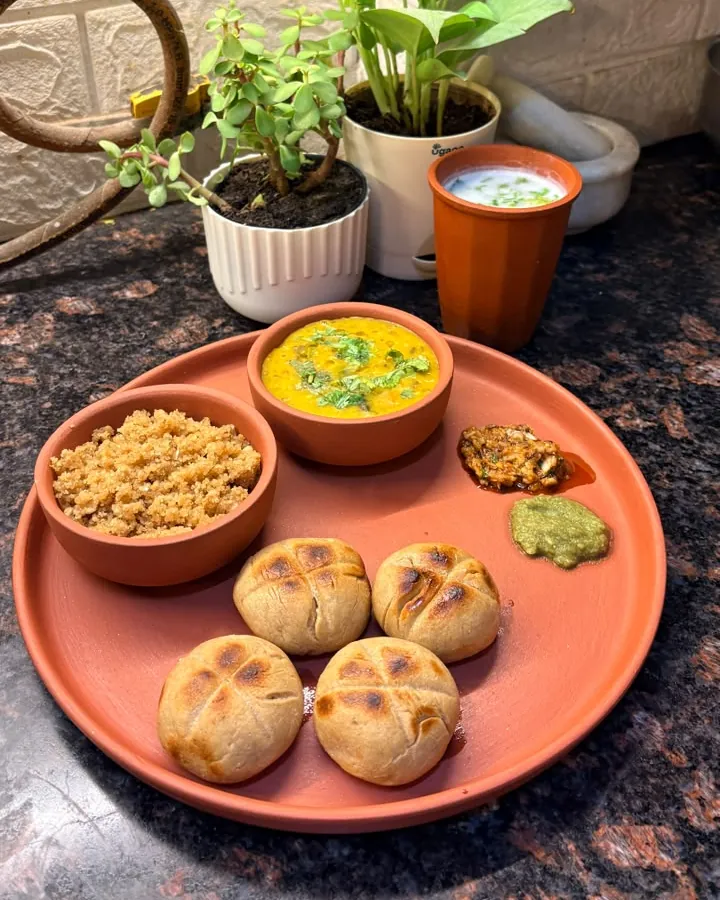
There were several things on it, each in its own small space, though not perfectly separated. One preparation had already started moving toward another. A spoon rested along the edge. The bread was still warm enough to fold without breaking.
I had been thinking about work until that moment.
Not one particular problem. Just the collection of unfinished things that follows you home: a message that still needs a reply, a task to remember tomorrow, a conversation replaying itself for no useful reason. My shoulders felt heavy. Even deciding what to eat had begun to feel like work.
Then the plate arrived.
I did not feel grateful immediately.
That is the honest part.
At first, I only felt hungry.
The meal that does not introduce itself
Everyday food rarely explains itself.
It does not tell you how early someone started preparing it. It does not list the number of times a hand moved between the stove, the sink and the refrigerator. It does not mention the vegetables washed, the dough pressed, the lid lifted, the flame adjusted or the salt checked with wet fingers.
It simply appears.
This is why ordinary meals can become almost invisible.
We notice them when something is missing. When the bread is cold. When the salt is a little more than usual. When the usual preparation has changed. When nobody has had the time or energy to cook.
But when everything is there, we often begin eating without looking closely.
I have done this many times.
I have sat before a home-style meal while still reading something on my phone. I have taken the first bite before properly sitting down. I have thought about tomorrow while eating food made today.
There is no cruelty in this. Mostly, it is tiredness.
A long day narrows attention. You begin to see only what is urgent. Food becomes one more thing to finish before sleep.
Still, an ordinary plate waits with surprising patience.
It does not mind that you are distracted. It does not demand admiration. It remains warm for as long as it can.
The work hidden in repetition
The first bite changed very little.
The second did more.
By the third, I had stopped looking at my phone.
There was something familiar in the temperature, the softness, the slight resistance of the bread as I tore it. One preparation was gentler than the other. Another carried a little more spice. Nothing was arranged for effect, but the parts made sense together.
That balance did not happen by accident.
Everyday cooking is full of decisions that become invisible because they are repeated so often.
How much water is enough.
Whether the dough needs another minute.
Whether the flame is too high.
Whether there is enough for everyone.
Whether the person eating has had a difficult day.
These choices are rarely announced. Nobody places the meal down and says, “I remembered that you prefer this softer,” or “I kept the spice lower today,” or “I made enough because you might be hungry later.”
Care in Indian homes is often less verbal than that.
It arrives as a second serving before you ask.
It appears as the warmer bread being passed to your side.
It notices that you are eating slowly.
It says, “Have a little more,” even when the plate is still half full.
Sometimes this care feels comforting. Sometimes, if you are very tired, it can feel mildly irritating.
You say you are done.
Someone says you have eaten nothing.
You point to the clearly visible food already missing from the plate.
They remain unconvinced.
This small argument has happened around countless tables. It is almost a language of its own.
Underneath it is a simple concern: Are you all right? Have you eaten enough? Is there anything else I can do?
The words may never be spoken that way.
The bread arrives instead.
Eating after a tiring day
There is a particular kind of hunger that comes after continuous work.
It is not always sharp. Sometimes it feels dull and delayed, as though the body has been waiting politely while the mind stayed busy. You do not realise how hungry you are until the first few bites are gone.
Then the meal begins to bring you back.
You notice the chair beneath you. The fan moving warm air around the room. The soft clink of a spoon against steel. A pressure cooker being washed in the kitchen. A television playing somewhere nearby, loud enough to be heard but not properly followed.
The day begins to loosen its grip.
Not completely. Home food does not perform miracles. A tiring day remains tiring. Work does not disappear because dinner is warm.
But the body receives something the mind has not been able to provide: a clear instruction to slow down.
Chew.
Swallow.
Reach for water.
Tear another piece.
For those few minutes, there is a sequence that does not need ambition.
I think this is one reason everyday meals matter so deeply, even when we hardly speak about them. They interrupt the pressure to keep producing. They return us to basic needs without making those needs seem small.
Food is placed before us.
We sit.
We eat.
The simplicity can feel almost unfamiliar after a day spent trying to manage everything else.
What the empty plate reveals
By the time I finished, the meal looked less complete than when it had arrived.
A small trace of food remained near the edge. The spoon had shifted position several times. A few crumbs rested on the table. The last piece of bread had been used to gather what was left.
An emptying plate is not usually beautiful.
It is useful evidence.
It shows where attention returned. It carries the marks of appetite, habit and preference. It tells you which part was finished first and which was saved for the last bite.
I sat for a little longer after eating.
Not because I had reached some grand understanding. I was simply no longer in a hurry to stand up.
That was enough to make me look again at the plate and think about how often such meals arrive without ceremony.
The same kind of chopping.
The same rolling.
The same checking of the flame.
The same question about whether there is enough.
Repetition can make care difficult to see. We tend to associate love with effort that looks unusual: a surprise, a special dish, a beautifully set table.
But much of care is repetitive.
It is doing the necessary thing again, even when nobody applauds.
It is remembering that people will return hungry.
It is making food on days that are themselves tiring.
An everyday plate may not hold a dramatic memory. It may not become the meal someone describes years later in perfect detail. Often, it belongs only to that evening.
Still, it holds the work of hands that kept moving before we sat down.
It holds small adjustments made without discussion.
It holds the expectation that someone will come to the table.
The plate had arrived with a quiet metal sound.
When I finally carried it back to the kitchen, it was lighter.
So was I.